Considered pious in Hindu rituals, Consumed roasted flour in pickles and the seeds even in sweets, Sesame or “Til” is grown in hilly regions of Nepal, and harvesting is tedious and requires manual labor.
In this article we’ll discuss the production and consumption of Sesame (Til) in Nepal.
Sesame is called “Til” in Nepali, and normally based on color there are two types of Sesame is grown in Nepal i.e. Black Sesame or “Kaalo Til”, White Sesame or “Seto Til” and Brown Sesame or “Khairo Til”.
Growing Sesame
Sesame can be grown even on steep slopes and doesn’t require a ton of water and fertile land like rice. Usually Sesame or Til is planted on Baari, land where there is no water irrigation facility or on a steep slope in the hills called “Khoriya”.
Khoriya is a traditional indigenous slash-and-burn agriculture practice in hilly regions of Nepal. This integrated farming system involves clearing the plot of land by burning the vegetation and planting the crops for a season. After harvest of the crop, the land is left fallow (allowed to “rest and recover”), during which natural vegetation regrows, replenishing the soil nutrients.
After preparing the land, either on Baari or Khoriya, sesame seed is planted in the month of Shrawan (July-August).
Traditionally Sesame was grown as a self-consumption crop but now it’s being transferred as Cash crop with urbanization.
And merchants from cities visit villages to buy the sesame seeds from the villagers.
But the process of harvesting is tedious and mostly done manually.
Sesame Harvesting Process in Rural Villages of Nepal
Sesame is usually harvested in the month of Kartik (October).
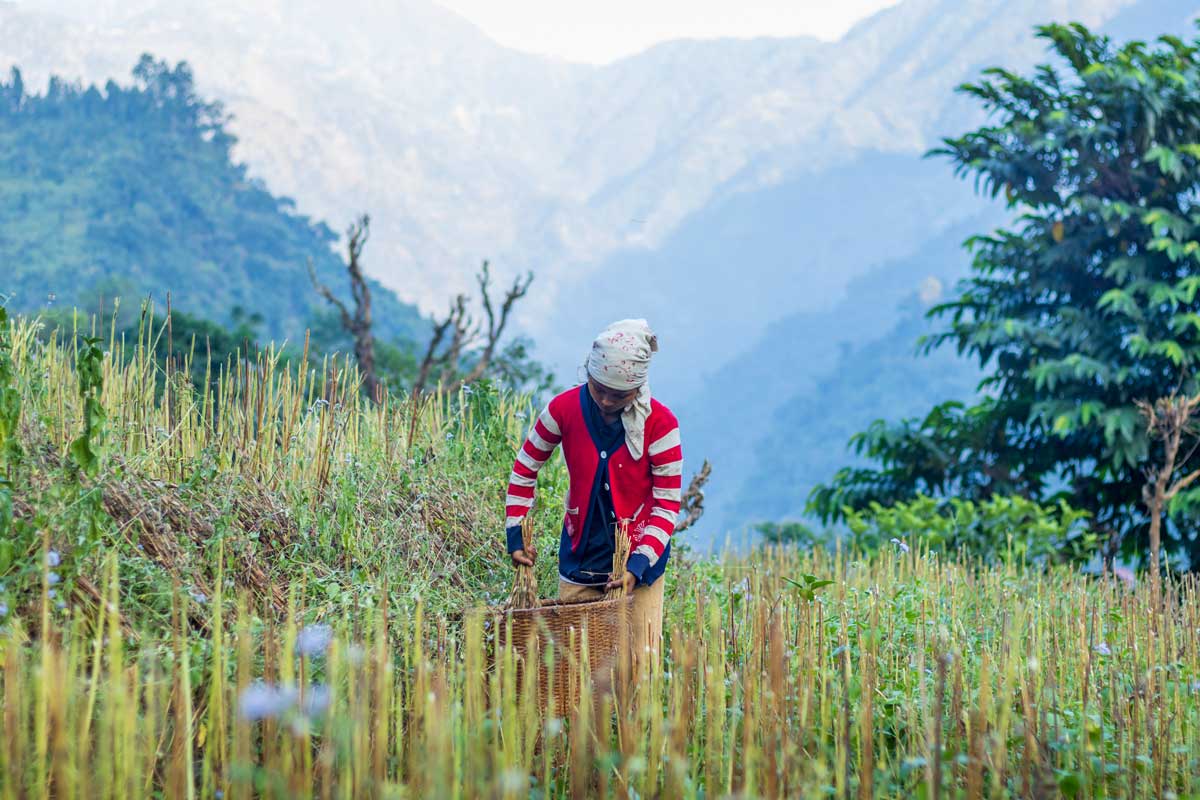
First the plant is cut from the bottom as it begins to ripen (plants start turning gray from green), then dried in the field for a few days.
Then in a wicker basket, farmers hit the top of dried plants into the basket to take out the seed (as shown in the video below).
And it should be done in the early morning or evening to avoid bursting of seeds from pods in the plant and disperse on the land. In the afternoon when the sun is bright and temperature is high, just a shake of the plant can cause seed pod burst and maximize the chances of spilling on the ground before the plant is taken to the basket.
Later the unwanted particles like leaves and stems that fall in the basket are removed and the seeds are sold to merchants for cash or stored for future use at home.
Uses of Sesame (Til) in Nepal
In Nepal, Sesame (Til) is used as a normal food as well as a pious object in culture and traditions.
In Hindu traditions as well as other traditions in Nepal, Sesame seed and its oil is considered pious in various rituals and must have.
Similarly, toasted sesame is used to make “Til ko Laddu” (ball confection) which is the must have sweets to celebrate “Maghey Sakranti” festival. It is believed that the consumption of Sesame sweets produces heat in the body to endure the coldness in the month of Magh (Winter month in Nepal). This sweet delicacy is prepared by mixing roasted sesame with Jaggery.
Also the flour of toasted sesame is used in making “Achaar” (pickle). Mostly while making Achaar from fresh greens like Cucumber, Tomatoes, Cabbage, etc. sesame flour is used which brings a nutty flavor and enhances the taste.
Along with Achaar and Sweets, Sesame flour is also used in preparing lemon snacks. Fresh lemon flesh is mixed with salt, sugar, chillies and toasted sesame flour and snacked.
Apart from traditional uses on consumption and on rituals, sesame seeds are also used on making breads (some traditional and mostly on western influenced bakery items). And in foreign cuisine restaurants like Chinese and Korean, the use of sesame oil is used.
You may also want to discover some of our unique traditional agricultural systems like “Parma” and “Guhaar”.
Health Benefits of Sesame Seeds
Sesame seeds are rich in protein, vitamins, minerals, and antioxidants.
Some of the major health benefits of consuming sesame seeds are as follows
- May lower cholesterol
- May help lower blood pressure
- May soothe arthritic knee pain
- May support healthy bones
- May aid blood cell formation
- May aid blood sugar management
- Rich in antioxidants and Fights Infections
- Good source of B vitamins
- Good Source of Fiber
- Sesame seeds can also get rid of the bacteria that cause plaque on your teeth
Want Naturally Grown Products?
Join Our Waiting List
All the products are grown naturally in Khasrang which takes time. And due to high demand, they’re sold out in no time.
So join our Waiting List to be the first one to get notified when our products are ready to harvest.