While modern life often pulls families apart—into cities, jobs, or digital worlds—this remote Khasrang village has preserved an ancient tradition that draws every single family back together each year on the day of Holi, the vibrant festival of colors.
Far from the chaotic street celebrations seen in Kathmandu or other urban centers, Khasrang’s Holi is not just about splashing colors and laughter. It is a deeply ritualistic, communal gathering at the Thani temple, perched at the village’s highest point, where worship, sacrifice, equal sharing, and festive play weave together to protect, nourish, and unite the villagers in ways rarely seen elsewhere.
Happiness Engineered Thorough Annual Ritual
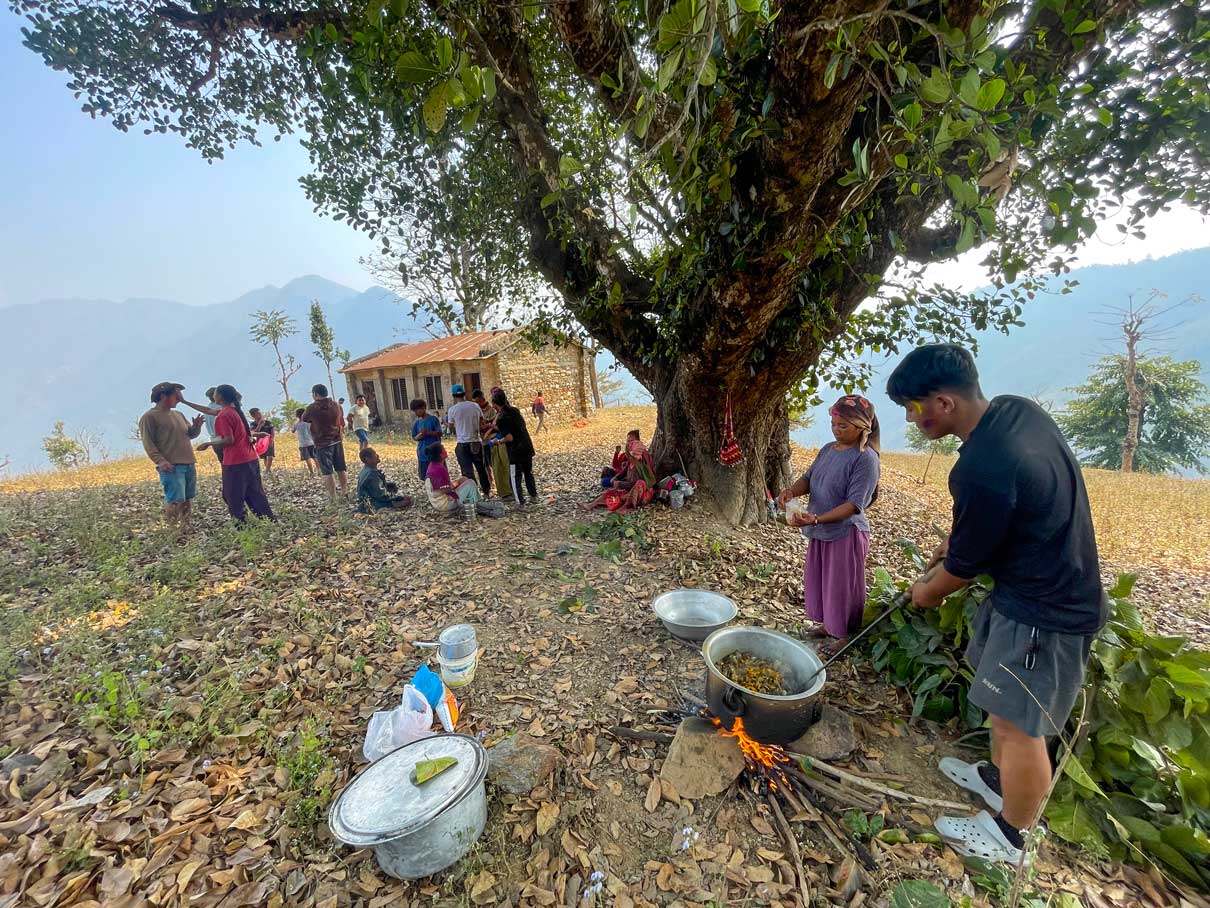
The tradition unfolds with clockwork devotion and infectious enthusiasm. On the sacred day of Holi, one member from every family in Khasrang makes the steep hike to the Thani temple. Kids with bright eyes, energetic youths, and wise elders all converge on the temple premises, turning the usually serene hilltop into a lively hub of activity.
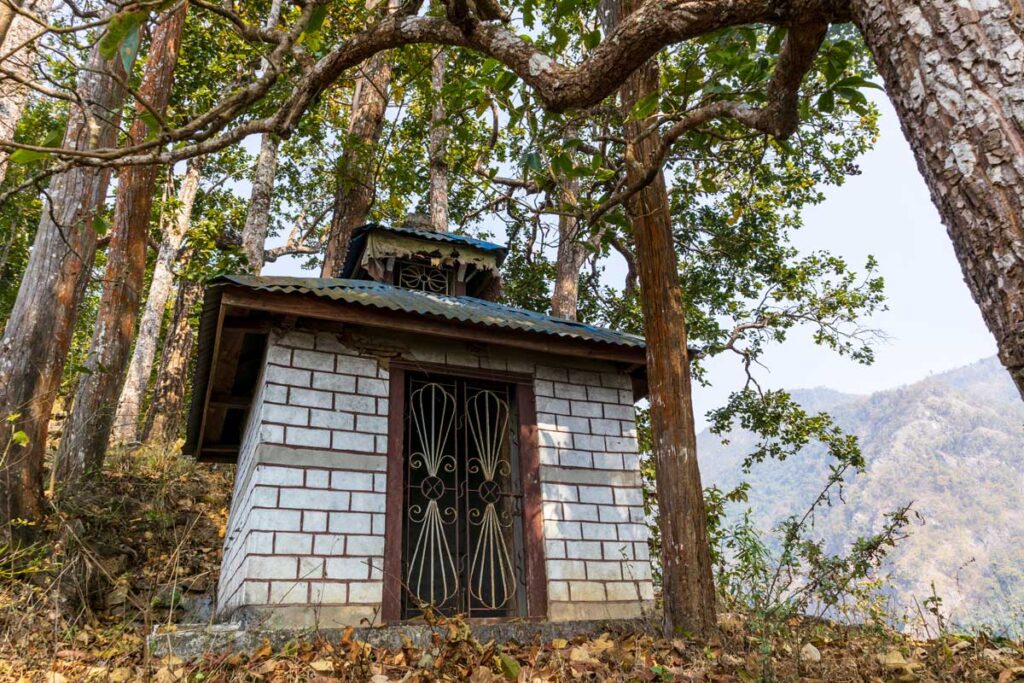 Thani Temple at Khasrang Village
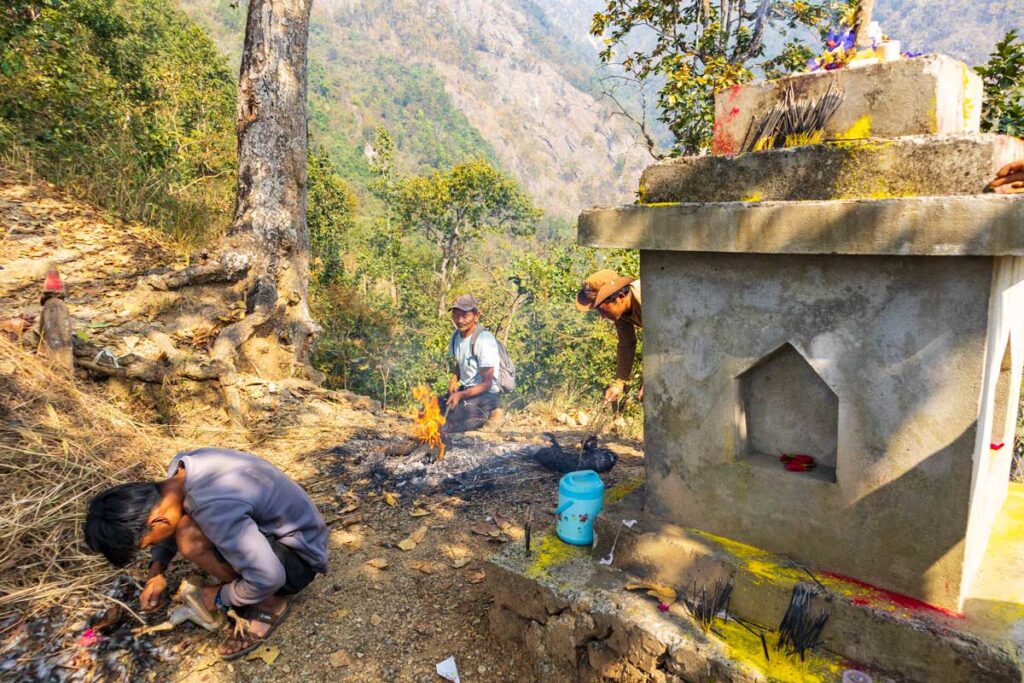 Worshipping and Offering at Thani Temple, Khasrang Village
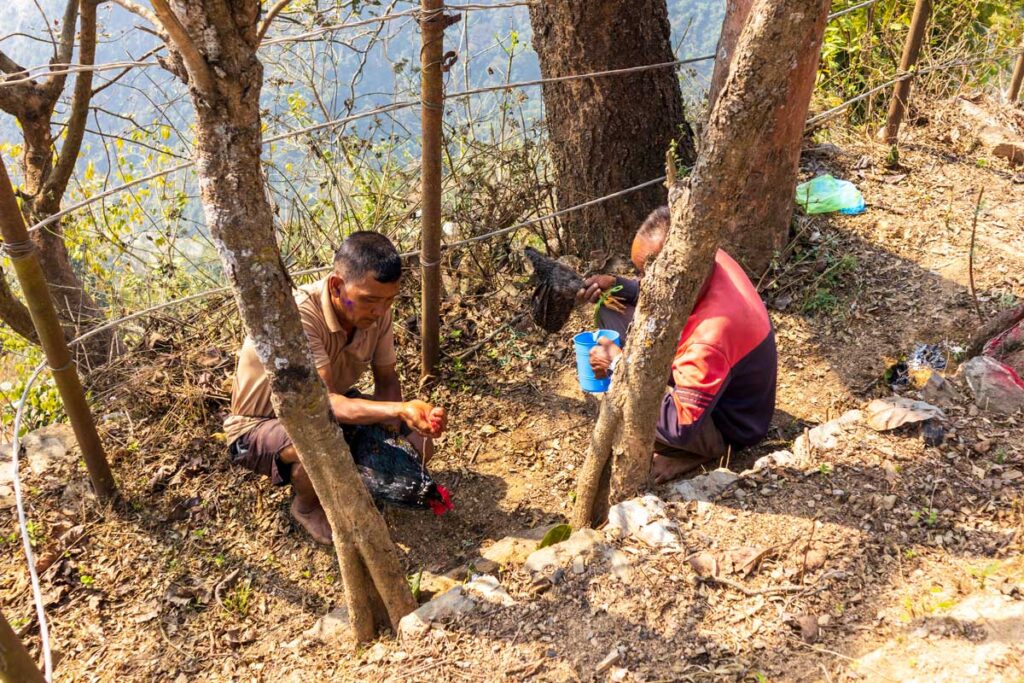 Offering Chickens to Mai Goddess, Khasrang Village
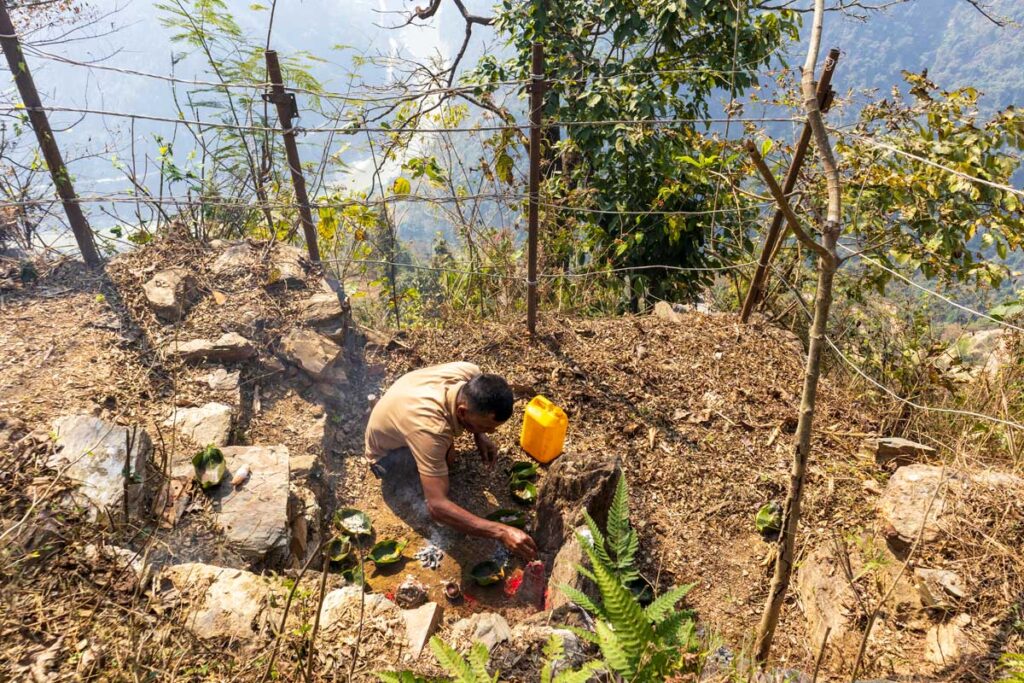 Worshipping Mai Goddess at Khasrang Village
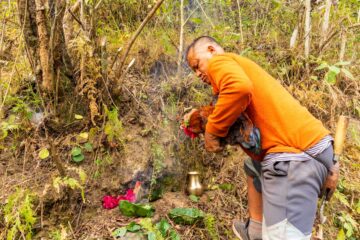
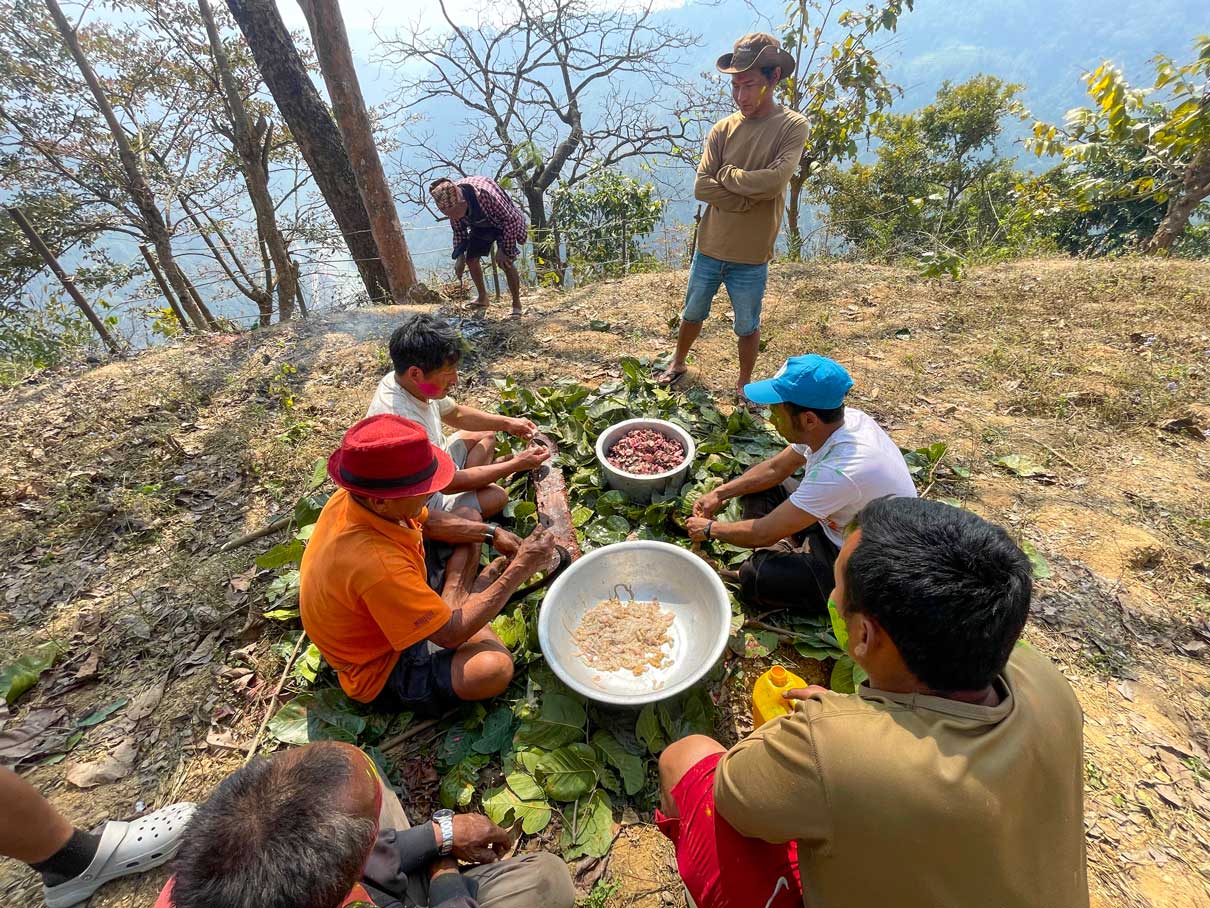
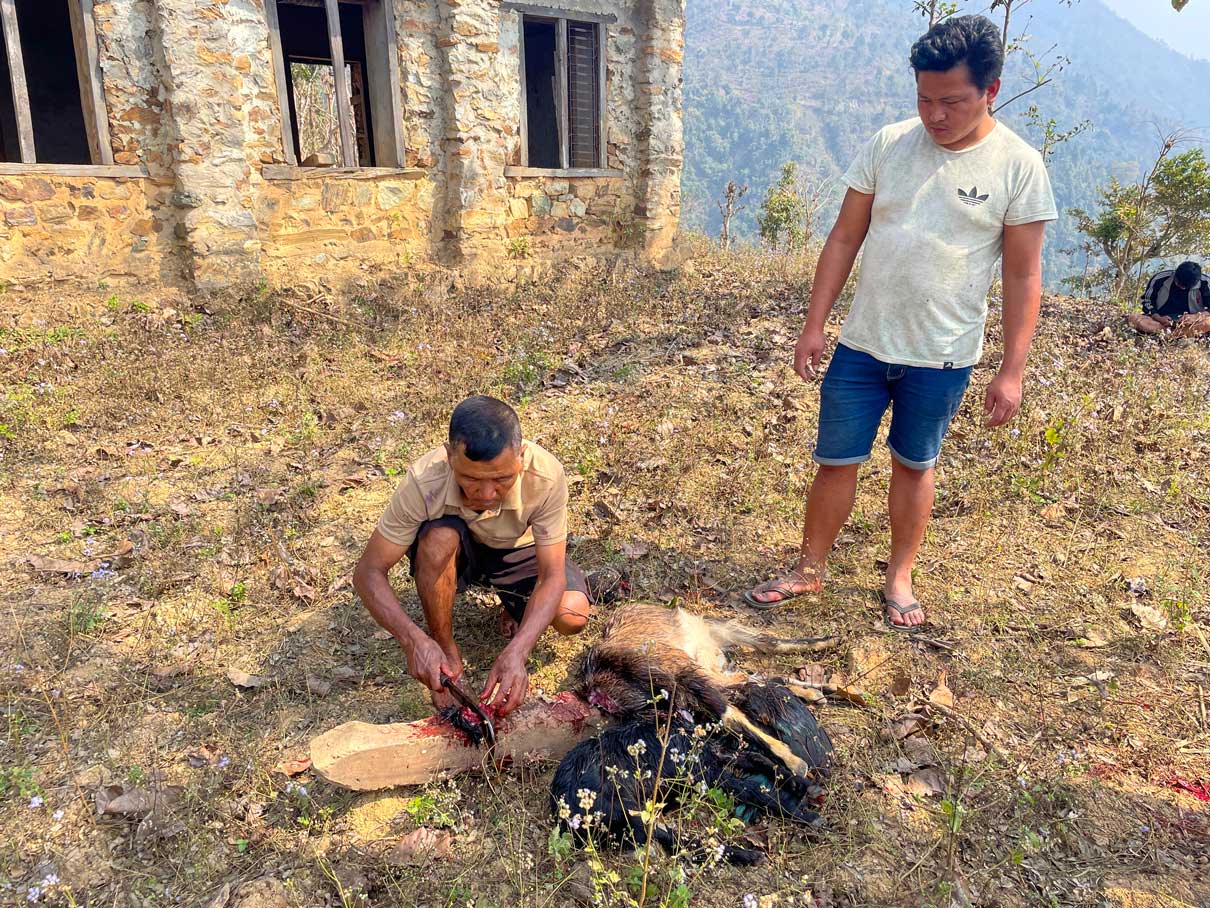
Together, they perform a heartfelt puja (worship) to the local goddesses “Thani” and “Mai.” Offerings of goats and chickens are presented with prayers for the village’s well-being: protection from unseen diseases, shielding against natural calamities like landslides or floods that haunt the hills, and blessings for a bountiful crop harvest to sustain them through the seasons.
What makes this ritual profoundly communal is what happens next with the offerings. Once the puja concludes, the meat from the sacrificed goats and chickens is meticulously portioned equally among all families—regardless of family size, wealth, or status. Each household receives its fair share, which is carefully carried back down the trails to be prepared at home as Masu Bhaat (meat and rice), a hearty, festive meal enjoyed together by every family member. This is no small feast in a place where daily meals are often simple; it becomes a shared luxury that everyone looks forward to, symbolizing that the village’s prosperity belongs to all.
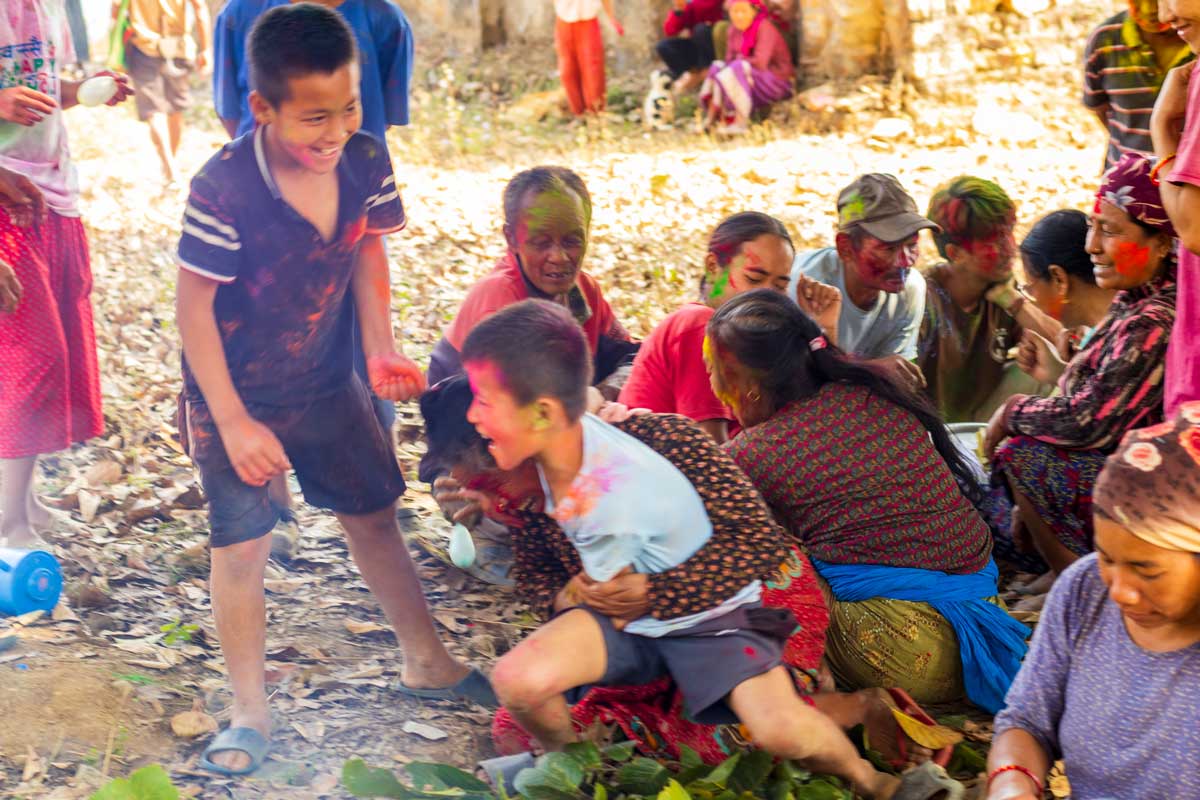
After the solemn worship, the mood shifts to pure celebration. The children and youths, faces still glowing from the temple rituals, dive into the traditional Holi fun—smearing each other with vibrant colors, laughing, chasing, and dancing amid the hilltop breeze. It is a joyful release that blends the spiritual with the playful, ensuring that even the youngest villagers feel part of something bigger than themselves.
Fairness and Collective Ownership
Finally, practicality meets piety: the total cost of the puja—including the animals, offerings, and any other expenses—is carefully calculated. Every family contributes an equal share, no more, no less. This equal collection ensures fairness and collective ownership, turning what could be a burden on a few into a shared responsibility that everyone honors willingly.
This system—gathering at one sacred spot, equal meat distribution, equal cost-sharing, and color play amid ancient worship—is described by locals as a practice handed down through generations, unseen in neighboring villages.
In a landscape where homes can be hours apart by foot, it transforms Holi from a simple national festival into a powerful anchor that keeps the community tightly knit.
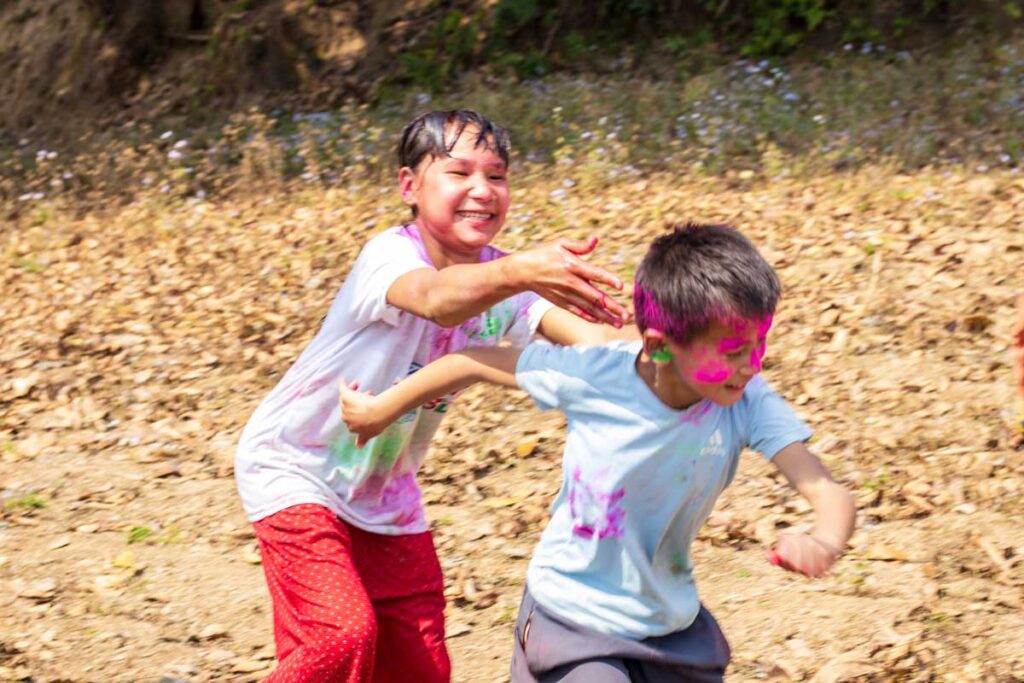 Kids celebrating holi at Khasrang Village
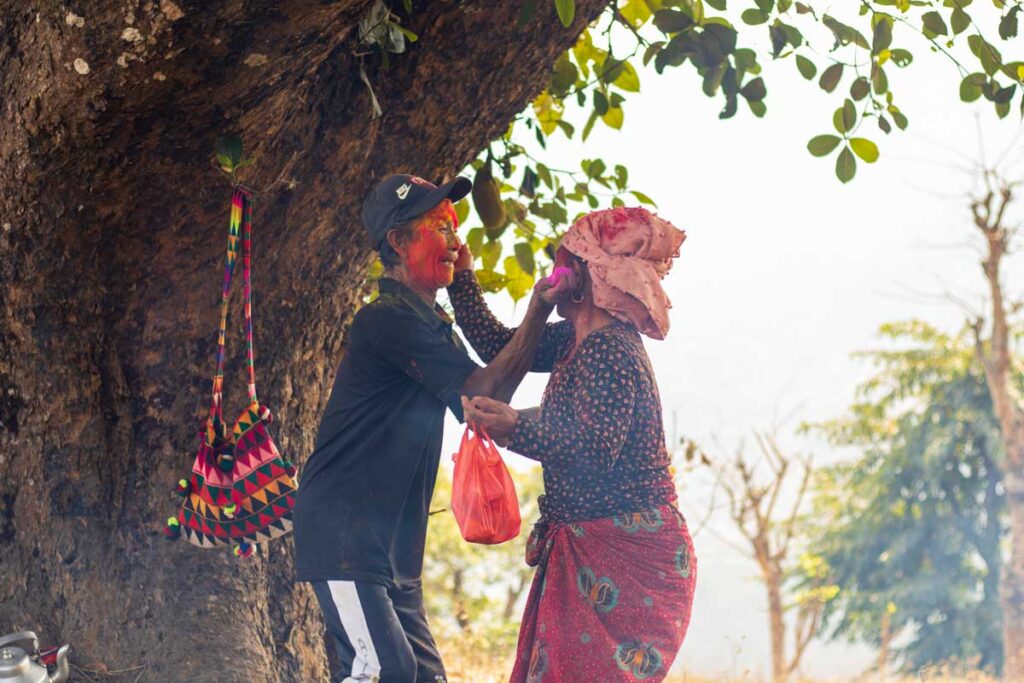 Elders celebrating holi at Khasrang Village
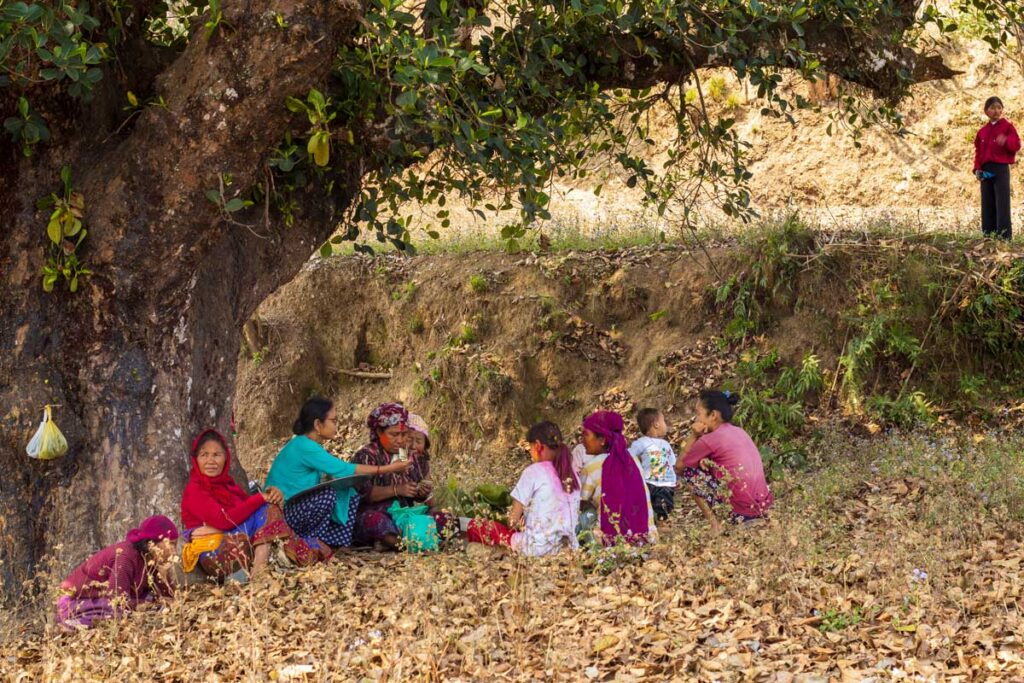 Elders celebrating holi at Khasrang Village
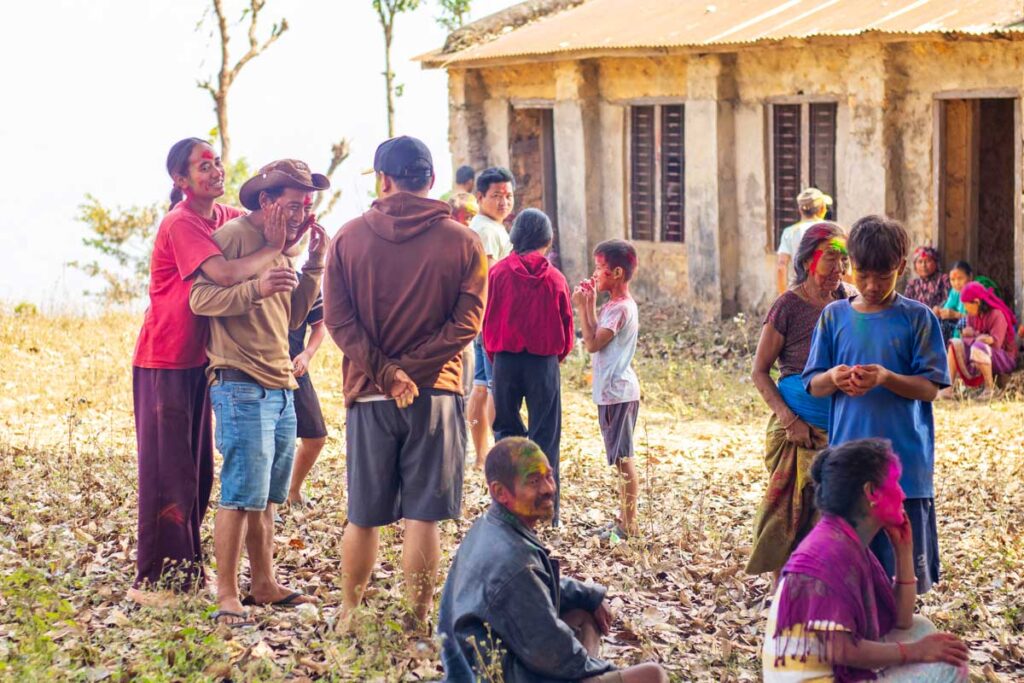 Youths at Khasrang gathered to celebrate Holi festival
Why This Tradition Matters: A Personal Reflection
In my view, Khasrang’s Holi tradition is far more than a colorful ritual—it is a masterclass in human connection that feels refreshingly vital in today’s world.
Why does it matter so deeply?
Because it actively combats the isolation that creeps into so many modern lives. Families in the hills already face physical distance, economic pressures, and the pull of migration to cities. Yet once a year, this tradition forces everyone to show up, face-to-face, shoulder-to-shoulder. The shared hike, the joint worship, the equal portions of meat carried home—it creates tangible moments of “we are in this together”.
In an age where social media can fake connection and individualism often wins, this practice delivers real belonging. It ensures no one is left out, no family misses the feast or the blessings, and the entire village feels protected and prosperous as one.
That collective sense of security and joy isn’t just heartwarming; it builds resilience. When a calamity hits or crops fail, the memory of standing united at Thani temple reminds them they can weather it as a community, not as scattered individuals. It keeps happiness alive not through fleeting fun, but through enduring bonds that outlast any single Holi.
How unique is Khasrang Holi Celebration?
Exceptionally so. Holi is celebrated across Nepal and India with colors, music, and sweets, but Khasrang’s version stands apart by fusing it so seamlessly with a temple-centered communal sacrifice and meticulous equality system.
Animal offerings for village-wide protection are part of some Himalayan traditions, but the equal meat distribution to every family—followed by equal cost-sharing—creates a rare egalitarian loop that I haven’t encountered described in other villages.
It’s not hierarchical or donor-driven; it’s perfectly democratic in its fairness. No family contributes more or receives less. That level of intentional equity, tied directly to a national festival in such a remote setting, feels like a living fossil of ancient communal living—beautifully preserved and still thriving.
What does it signify?
To me, it represents the best of human values: unity, gratitude, and harmony with the unseen forces that shape life in the hills.
The worship of Thani and Mai goddesses symbolizes deep respect for nature’s power and the divine—acknowledging that health, safety, and harvests are gifts to be thanked for collectively, not taken for granted individually.
The equal sharing of meat and costs signifies equality and solidarity: in a world quick to divide people by status or wealth, this tradition declares that every family’s well-being is equally important.
It signifies resilience too—the willingness to hike hours, pool resources, and celebrate together despite hardship.
And above all, it signifies joy as a shared duty. By blending solemn prayer with playful colors, it reminds us that spirituality and fun are not opposites; they nourish each other.
In Khasrang, happiness isn’t accidental—it’s engineered through such annual rituals that keeps the village’s heart beating as one.
This tradition isn’t just keeping Khasrang villagers together happily; it’s a quiet lesson for all of us.
In our fast-paced, fragmented world, perhaps we could all use a little more “Thani temple” thinking—gathering, sharing equally, and coloring our lives with collective joy.